On May 28, Canadian independent booksellers and independent publishers gathered online to hear from their colleagues about how they collaborate and uplift each other. In this session presented by BookNet Canada and the Canadian Independent Book Industry Association (CIBA), in partnership with the Literary Press Group (LPG), booksellers Mike Hamm (Bookmark Halifax) and Laura Ash (Another Story Bookshop), and independent publishers Elham Ali (ECW Press) and Hilary Ilkey (Biblioasis) shared insights into the practical strategies that allow them to strengthen their partnerships and sell more books. The recording and accompanying resources from this session are available on our website.
At BookNet, we’re all about facilitating collaboration, streamlining processes, and making selling books easier. Drawing inspiration from key insights shared by our panel of experts, we’ll share a series of key takeaways along with resources that will help indie booksellers and indie publishers accomplish them and more.
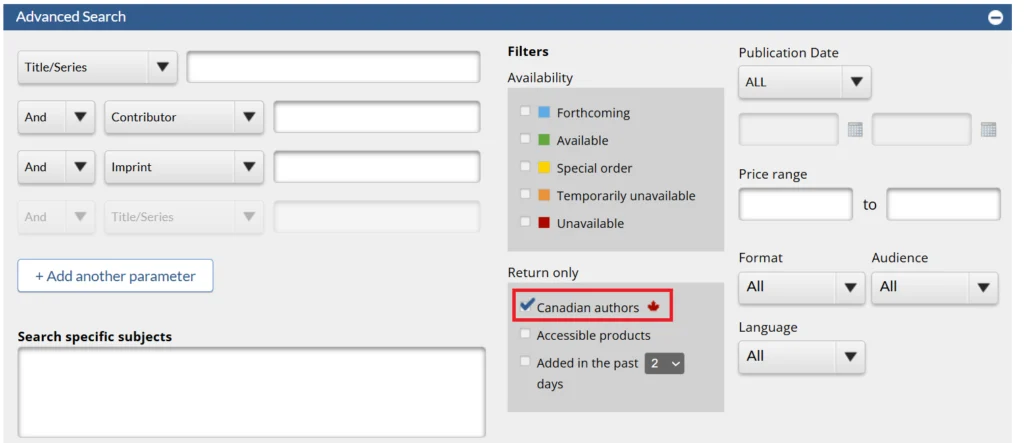
1. The Canadian 🍁 marker makes a difference when choosing what to order
During the panel, we heard about the power of the Canadian contributor icon. Booksellers are champions of Canadian-authored titles and, in a sea of content, a Canadian marker can be the differentiator that helps them notice, order, and sell your titles.
Publishers, ensure that Canadian contributors — authors, illustrators, translators, or editors (in the case of an edited collection of material) who are Canadian citizens or permanent residents of Canada — are properly identified in your metadata records. Read this resource to learn about the many different benefits that come with properly identifying Canadian contributors in a book’s metadata.
Booksellers, when looking for books to order, use the Canadian authors filter in CataList’s Advanced Search to streamline your search. CataList is free for retailers. You can request an account from the CataList home page and learn about all its features in the CataList Help Manual.
2. Contributor residence information (beyond country) should be easy to find
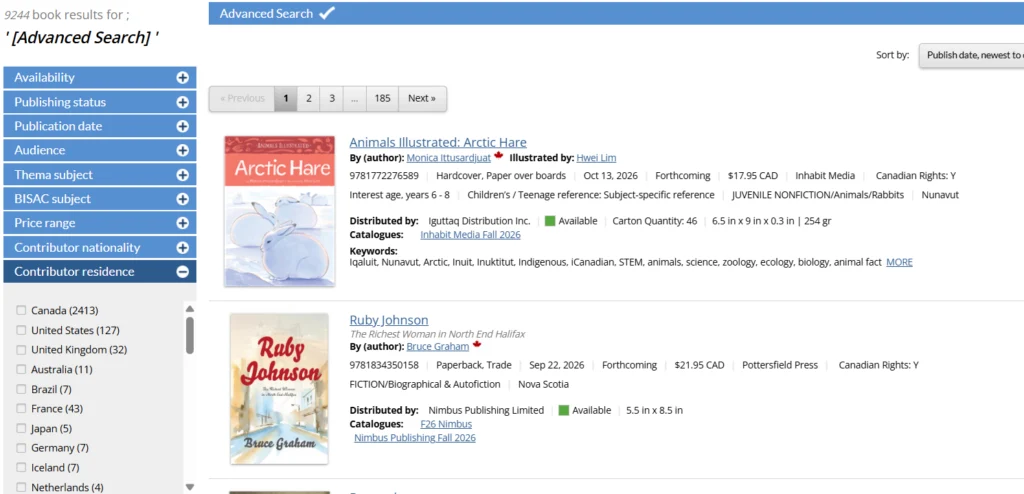
Beyond the Canadian marker, which only signals the contributor’s relationship to the country, contributor residence information can show the province or region the author is from or lives in. In the panel, Mike Hamm shared how, when they found that Vanessa F. Penny, author of The Witch of Willow Sound was a Newfoundlander who lives in Nova Scotia, they were immediately in and interested in ordering her book.
Publishers, booksellers are interested in supporting authors from their provinces and regions. Having access to this data through the book’s metadata and the book’s website can be the reason why they choose to order a book. Ensure your ONIX records include this data point to allow sites like CataList to display this information. For ONIX 3 records, CataList uses code ‘08’ (Citizen of) and code ‘04’ (Currently resides in) from List 151 to allow for discoverability for titles with contributors who are citizens of a country or currently reside in a region.
Booksellers, when using CataList to search for books, you have the option to filter by the contributor’s residence using the menu on the left panel of your search results page or, depending on the title’s metadata, see this information in a title detail page. Learn more about these new features in our latest announcement.
3. Knowing booksellers and establishing relationships is important
When establishing or nurturing a commercial relationship, it helps to learn about the other party. In the publisher/distributor-bookseller relationship, this information can strengthen connections, increase the efficiency of marketing efforts, and facilitate efficient collaboration.
In addition to this, in our panel, we learned from Laura Ash about how, when selling to bookstores, it’s helpful to share good data, highlights, and/or good one-liners. Because booksellers don’t have the capacity or the time to read all the books and all the ARCs they get no matter how much they would like to.
Publishers and distributors, getting to know the booksellers you work with, the vibe of their store, their staff, what subjects and topics they focus on, and the community is key. By knowing your booksellers and their customers better, you can:
- Confidently curate collections of books that would be of their interest, which can be easily shared via digital catalogues on CataList. Hot tip: You don’t have to do this based on vibes alone; publishers participating in SalesData with peer access to a retailer’s data can run gap analysis reports to see which books the store should consider ordering and bestseller reports to see which titles and subjects are selling well.
- Plan marketing campaigns (co-ops, author events and signings, giveaways, etc.) that resonate with their customer base and community.
- Offer tailored, title-specific information about why a title is a good fit for their store. One way to do this is by using CataList’s Notes feature.
4. Books don’t exist in a vacuum; leverage the power of comparable titles!
In the panel, we heard from Mike Hamm how, as a bookseller, he’s interested in knowing if, for example, a poet who has recently launched a book has been part of a major poetry collection. He mentioned that knowing this increases the possibility of them taking a chance on a new poet.
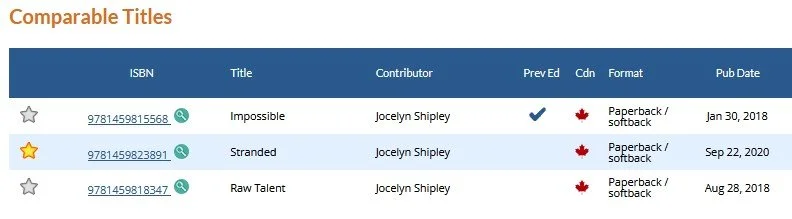
Publishers, this is a very good example of how CataList’s comparable title feature could be a tool to highlight such a thing easily and effectively. A comparable title is a book or item related to another book or item featured on a title page.
Below, we’re sharing a few additional resources for further reading:
For publishers:
- CataList resources for publishers
- All about the Title Detail page
- Integrated SalesData reporting into CataList
- Enabling ARC requests and sharing full previews on CataList
- ONIX 2.1 and ONIX 3 mapping into CataList
For retailers:
- CataList resources for retailers
- Requesting ARCs with CataList
- Keeping up with changes to forthcoming titles
- Keeping up with new releases
- How to sell books you don’t read
Got questions about how BookNet Canada’s products and services can help you? Don’t hesitate to reach out.