

 Got ebooks? Here’s a primer on ONIX 3.0 just for you. We’ll get you set up with the ONIX manual, show you which sections to look at, and explain a bit about why things are set up the way they are. Bonus: Your host is a gnome named Biblio. A metagnome, if you will. You’ll see.
Shiny New BiblioShare Webform Features
We’ve made a few improvements to BiblioShare Webform based on great feedback from publishers who use the tool. We’ve added new fields to give you broader access to the ONIX standard and – for you CataList users – to make some data easier to transfer to BNC CataList. We’ve also added new selection functionality to help you customize your exports. Read on for a short run-through of the major changes that are now available on the site.
ONIX 2.1 to 3.0 Converters: What They Can and Can't Do
 Converting ONIX 2.1 to ONIX 3.0 is a very useful way to learn where “stuff” goes in ONIX 3.0 but publishers are confused why, once they’ve done the conversion, it’s just not good enough. I’ve been participating in arguments about it–and, as always, after the fact, came up with a succinct explanation. Be happy you weren’t involved in my long ones! Read on for an explanation of why ONIX 2.1 to 3.0 converters fall short, and how you can make good use of them anyway.
Covering your Bases: 2014 Standards Implementation and Business Planning
 This week’s guest blog post is from Christen Thomas, Executive Director of the Literary Press Group of Canada. At Tech Forum’s BookNet 101 event, she’ll be presenting on how to take new standards such as Thema and ONIX 3.0 into account while mapping out a business plan. She will also include copious sports metaphors. You’re up to bat, Christen!
Library Pricing for Digital Products
With the growing list of ebooks being made available to libraries for patron loan, we’ve seen a lot of experimentation with different publisher payment models, from loan limitations to different up-front pricing for libraries with unlimited loan licensing. If your publishing house has opted for this second option — or even if you have the same pricing for consumer and library purchase, but you want to be clear about this to the supply chain — how do you indicate this in your ONIX record?
Better Living Through Better Metadata

I’m very pleased to announce that a new, fully updated version of the joint BookNet Canada / BISG Best Practices for Product Metadata guide, including guidance for digital products and ONIX 3.0, has been released:
Best Practices for Product Metadata: Guide for North American Data Senders and Receivers.
What's in a Name?
 Okay, we are data nerds. Data junkies, even, if you will. We spend time (a lot of time) looking at and thinking about how to make data more accessible, both for people and for machines.
Sometimes issues crop up in the data that are complicated and nuanced and take time to unravel to get the data flowing smoothly again. This isn’t one of those issues. This is an easy check that you can do on your own records that could make a big difference in making sure your data can be processed and retrieved correctly.
An Orderly Transition from ONIX 2.1 to ONIX 3.0
In my last post, I looked at what it means to implement ONIX 3.0, and came to the conclusion that it meant carrying enough “granularity” to improve metadata accuracy to support international sales. And I suggested that even ONIX files shared only within Canada will still need to implement new support in order to co-exist in a supply chain that supports international metadata. I hope that I also showed that ONIX 2.1 supports most of the same ability (even if ONIX 3.0 does it better), and that international support means everyone pulling up their meta-bootstraps.
What Does It Mean to Implement ONIX 3.0?
 It’s a vexing question. I like to explain ONIX for Books by separating out the standard (what you track as metadata) from the technical side (XML, which can be thankfully ignored in this post). ONIX as a standard is a way for two companies to exchange information about books without ambiguity by using published definitions. Using the standard involves those companies agreeing between them on what level of detail they need from the ONIX data fields to support their systems and sales.
Global Ebook Domination through Better Metadata
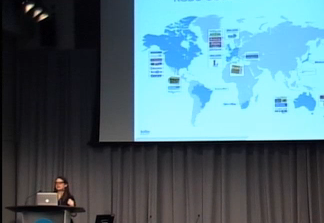 Kobo’s Ashleigh Gardner gave an information-packed workshop at Technology Forum 2013 that covered some important tips and trends for selling ebooks internationally. In this video you’ll learn some pricing basics and how to ensure your ONIX records have all the information necessary to sell your books into as many territories as possible. And you’ll also get country-by-country pricing trends and tax structure tips that will help inform the decisions involved in selling your ebooks worldwide.
